




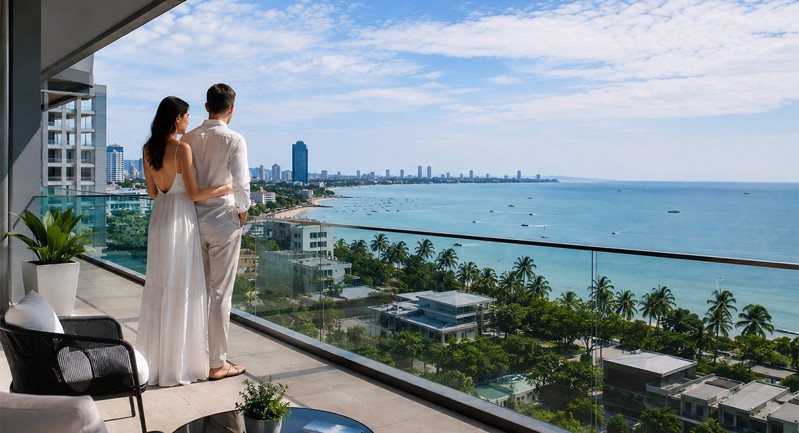
Can Foreigners Buy Property in Thailand?
Yes, foreigners can buy property in Thailand, but there are important rules to understand before making a decision.
The most common and secure way for a foreigner to own property in Thailand is to buy a condominium under the foreign freehold quota. Under Thai condominium law, foreigners can own up to 49% of the total saleable area of a condominium project, while at least 51% must remain under Thai ownership. This quota is calculated by floor area, not simply by the number of units.
For example, if a condominium project in Pattaya still has foreign quota available, a foreign buyer can purchase a unit in their own name with freehold ownership. This means the buyer’s name is registered on the title deed at the Land Department
Can foreigners own land in Thailand?
In general, foreigners cannot directly own land in Thailand. This means buying a house or villa with land is more complicated than buying a condominium.
One common structure is a long-term leasehold. In Thailand, land can usually be leased for up to 30 years. In some cases, a foreign buyer may lease the land and own the house or building structure built on the land. This type of purchase must be checked carefully, especially the lease agreement, registration at the Land Department, and rights connected to the house structure.
For most foreign buyers, especially first-time buyers, a freehold condominium is usually the simplest and safest option.
Buying a new condominium from a developer
Many foreigners buy property in Thailand directly from developers, especially in cities like Pattaya, Bangkok, Phuket, and Hua Hin.
When buying from a developer, the process is usually straightforward.
You choose a unit, check whether foreign quota is available, sign a reservation agreement, pay a booking fee, then sign the sales and purchase agreement. Payments are usually made according to the developer’s payment schedule.
In Pattaya, many new projects offer payment plans during construction. This can be attractive for foreign buyers because they do not need to pay the full amount immediately.
Before buying, it is important to check whether the project has foreign quota available, the developer’s reputation, the payment schedule, the expected completion date, what is included in the unit, and the transfer fees and taxes.
Buying a resale condominium
Foreigners can also buy resale condos from existing owners.
This can be a good option if the buyer wants a completed unit, immediate ownership transfer, or rental income sooner. However, resale purchases require careful checking.
Before buying a resale condo, the buyer should confirm that the unit can be transferred under foreign quota. If the unit is currently under Thai quota, it may not always be possible to transfer it into a foreigner’s name unless foreign quota is available in the building.
The buyer should also check the title deed, outstanding maintenance fees, sinking fund, condition of the unit, and any existing rental contract. A good professional agent can help check these details and guide the buyer through the process.
Funds must usually come from overseas
For a foreigner to register a condo in their own name under foreign freehold ownership, the purchase funds normally need to be transferred into Thailand from overseas in foreign currency. The Thai bank then issues documents confirming the foreign currency transfer, commonly known as a Foreign Exchange Transaction form or bank certificate, depending on the amount and bank process. These documents are usually needed for registration at the Land Department.
It is important that the transfer purpose is written correctly, for example: “For purchase of condominium unit in Thailand.”
This is one of the reasons buyers should speak with an experienced agent before sending money.
Can foreigners get a mortgage in Thailand?
Foreigners sometimes ask whether they can get bank financing in Thailand. In practice, it is usually not possible unless the foreign buyer has income in Thailand and pays taxes locally.
For most foreign buyers, purchases are made with overseas funds, cash payment, or through developer payment plans during construction. For off-plan projects, developer payment plans are often more practical than traditional bank loans.
Why Pattaya is popular with foreign buyers
Pattaya is one of Thailand’s most active property markets for foreign buyers. It offers beachfront condominiums, city-center projects, rental demand, international restaurants, hospitals, shopping malls, and easy access to Bangkok and U-Tapao airport.
Foreign buyers often choose Pattaya for lifestyle, retirement, holidays, and rental investment.
Areas such as Wongamat, Central Pattaya, Pratumnak, Jomtien, and Na Jomtien all have different advantages depending on the buyer’s budget and purpose.
Why work with a professional real estate agent?
Buying property in Thailand is not difficult, but it is important to understand the process correctly.
A professional real estate agent can help check foreign quota availability, compare new and resale options, explain payment terms, coordinate with the developer or seller, help with transfer preparation, and guide the buyer through the main steps of the purchase.
This is especially important for foreign buyers who are not familiar with Thai property rules, transfer procedures, and local market prices.
Final answer
Yes, foreigners can buy property in Thailand. The easiest and most common way is to buy a condominium under the foreign freehold quota. Foreigners can legally own a condo in their own name, provided the building has available foreign quota and the purchase funds are transferred correctly from overseas.
Buying land or houses is more complicated. A common option is a 30-year lease of the land, with possible ownership of the house structure, but this must be checked carefully before purchase.
At Pattaya PRO Real Estate, we help foreign buyers choose the right property, check foreign quota, compare new and resale options, and guide them through the buying process in Pattaya.
Disclaimer: This article is for general information only and is not legal advice. Buyers should check all details carefully before signing contracts or transferring funds